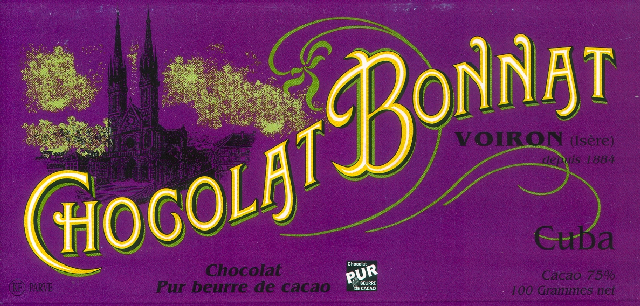

FLAVOR PROFILE: natural hazy tobacco undertones (same island famed for its cigars); royal palm & mahogany; almond, cherry, raisin, cream, sugar cane
CHARACTERISTICS: light acidic edge; medium bodied
Chocolate, rum & a cigar – the flavor keys to personal Paradise (plus Ibrahim Ferrer De Camino a La Vereda & Ignacio Piñeiro too)
The Spanish treated Cuba as a miltary encampment from which to launch campaigns on the firme or mainland of the continental Americas.
Forget arms, the diseases they carried virtually eradicated aboriginal populations.
More synonymous with cigars than chocolate, Cuba rivaled Barinas, Venezuela for the best tobacco in the world during the 17th Century (Virginia & Brazil were deemed to be of inferior quality). But Europeans who came to the New World in the wake of Columbus initially showed indifference to American botanicals because they were more interested in finding the spices of the East, in Asia, which they knew had a ready market waiting for them back home. Apathy turned to avarice, however, as tobacco eventually generated more wealth for the Spanish Royal Treasury than gold & silver bullion combined. It became their crown jewel while cacáo lagged behind. Actually, a poor third to the king crops of Cuba – sugar cane & tobacco leaf — & for a time cacáo even lagged behind cattle. Historically it followed similar boom ‘n bust cycles found elsewhere.
First documents mention late-1500s for the introduction of cacáo on the island, although earlier has been surmised, thought to come from the Atlantic coast of Mesoamerica. Cacáo trees would dot the countryside with San Juan de los Remedios in central Cuba serving as a hub for awhile. The arrival of Haitian migrant workers shifted cocoa production to the east, specifically Baracoa (site of the first Spanish settlement in 1512, eventually the Cuban ‘capital of cacáo’), Holguín, & Santiago de Cuba (the last a vital port & debarkation for Cortés’ 1518 invasion of Mesoamerica as well as de Soto’s expedition to Florida 20 years later).
Jacobo de la Pezuela’s monumental 4-volume Diccionario geográfico, estadistico, hístorico de la Isla de Cuba classifies cacáo introductions into 2 categories: a) Caracas / Maracaibo / Xoconuzco & b) Guayaquil / Marañón. The former perhaps generalized as ‘Criollo’ & the latter ‘Nacional’. Indeed American illustrator Samuel Hazard visited Cuba then to describe the Caracas pods as “red” which helps substantiate the genotype. Chronicles in the 1800s by Rev. Abiel Abbot report fermentation practices lasting but 2 days – another possible sign of the Criollo varietal.
Most of it cultivated in agroforestry environements boasting biodiversity. In fact, certain tracts back in the 19th century rail against monoculture plantations – the scourge of modern cacáo farming – because of the diseases they incubate on farms.
The high quality of Cuban cacáo was widely acknowledged such that in 1889 the hacienda Maria de Loreto owned by Cástulo Ferrer received a gold medal in Barcelona, Spain.
That aforementioned unequal relationship between Nicotiana rustica (tobacco) & Theobroma cacáo (chocolate) held on the isle of Cuba when Fidel closed just about everything in 1959, including Hershey’s sugar mill at Santa Cruz del Norte.
Today Cuba’s humble cacáo industry centers around Baracoa in the northeast. Because the island failed to keep pace with modernization after the revolution, it possesses by now some rather over-achieving ‘heirloom hybrids’ (such as they are), so cacáo here partially lives in a time-capsule; as vintage in some cases as the cars from the 1940s & 50s being driven around Havana well past their warranties.
The state of cacáo in 21st century Cuba provokes a rather counterintuitive notion — Communism: good for chocolate?
Before getting carried away with any utopic visions, smallholder plots belong to collectivized co-ops where many growers still refer to cocoa as furrío, a reference to the literal grind required to transform cacáo into chocolate.